



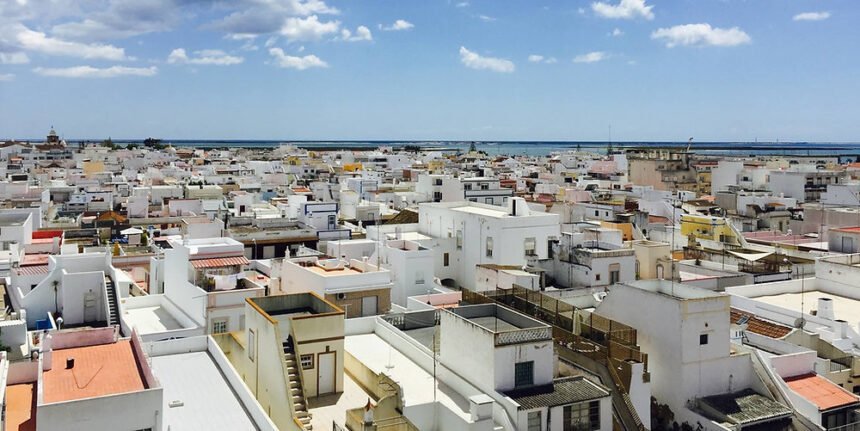
Anyone researching the eastern Algarve for the first time in 2026 quickly notices that Olhao does not look like the rest of the region. The town turns its back on the whitewashed, low-slung Moorish silhouette that dominates further west and instead presents flat-roofed, cube-shaped houses stacked tightly along narrow streets. For overseas buyers weighing a purchase here, understanding that architecture is not a matter of taste alone. It tells you how a building was constructed, how it behaves in the Algarve climate, and what a sensible renovation or purchase budget looks like.
Where the cubist style came from
Olhao grew wealthy in the eighteenth and nineteenth centuries through fishing, salt and trade with North Africa. Merchants and sea captains returning from the Maghreb brought back a building language of flat terraces, external staircases and rooftop lookouts known locally as acoteias and mirantes. The result is a townscape closer to a Mediterranean casbah than to a Portuguese fishing village. These rooftops were working spaces, used for drying fish and watching for returning boats, and today they are one of the most sought-after features a character property in the old town can offer.
That trading history also explains why Olhao feels denser and more urban than its neighbours. Land inside the old quarter was valuable, so houses grew upward and inward rather than outward, sharing party walls and drawing light from central patios and rooftop openings. A buyer who grasps this logic understands why a narrow frontage can still conceal a generous, light-filled home, and why the rooftop is treated as a full extra floor rather than an afterthought.
What the architecture means for a buyer
The distinctive single houses and substantial restored townhouses that define this part of the market behave differently from a modern build. Flat roofs need competent waterproofing and periodic maintenance, and original lime-plastered walls should generally be allowed to breathe rather than being sealed with modern cement renders. A well-restored character townhouse in the historic core commonly sits in the 700,000 to 1.4 million euro band in 2026, while a genuinely distinctive single house at the lagoon or saltpan edge can run from 1.2 to 2 million euros depending on plot, roof terrace and proximity to the water.
Buyers who value this kind of stock tend to work with advisers who know it street by street. A firm such as this specialist agency in Olhao spends its time on the larger, characterful houses rather than on generic two-bedroom units, which matters when you are trying to judge whether an asking price reflects genuine architectural quality or simply a fashionable postcode.
Features worth paying for
- A usable rooftop terrace with sea, lagoon or old-town views, ideally already waterproofed to a modern standard.
- Original architectural detail such as decorative platibanda parapets, tiled facades and internal stone staircases that cannot be recreated cheaply.
- A plot wide enough to bring in light, since the tightest streets can leave interiors dark without a courtyard or patio.
A practical way to view
The best approach for an international buyer is to view several properties across a single visit and pay attention to how each one handles the two constants of Olhao living, heat in high summer and moisture off the Ria Formosa. A cube-shaped house that has been sympathetically restored will feel cool and dry in July and shrug off the winter damp. One that has been patched with the wrong materials will announce itself within minutes. Learning to read the architecture is the single most useful skill a buyer can bring to this market in 2026.
For international buyers in particular, working with an adviser who can date a building by its parapet detailing and spot where a roof has been re-laid badly saves both money and disappointment. The cubist stock is the reason Olhao is protected in heritage terms, and it is also the reason the town rewards a slower, better-informed search than the resort markets to the west.