



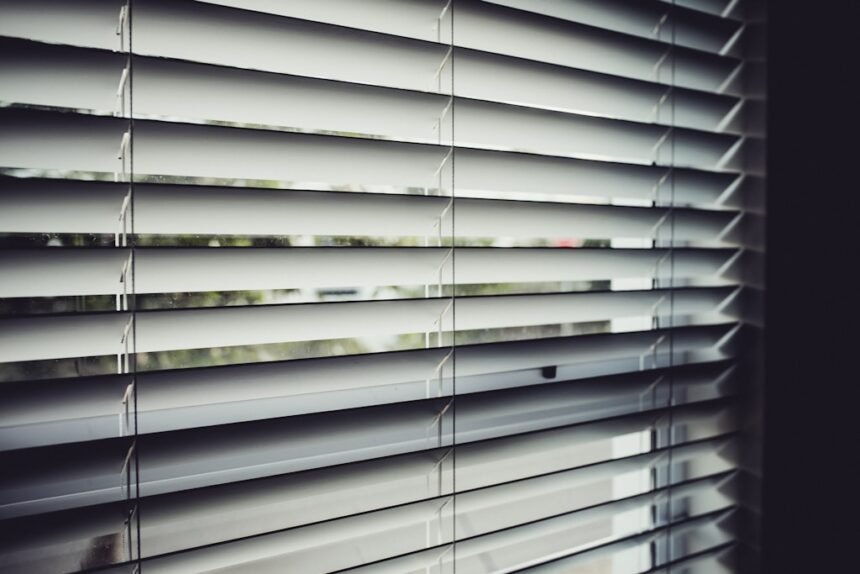
Anyone who has fitted a standard blackout blind and still noticed a persistent sliver of light creeping in along the top edge has run into one of the most common, and most fixable, shortcomings of basic blind design. Cassette blackout blinds address this exact weak point with a simple but effective addition: a fully enclosed headbox that wraps around the rolled fabric, closing off the one gap that ordinary blinds tend to leave exposed at the top of the window.
The problem with an open roller mechanism
A standard roller blind, even one made from genuinely opaque blackout fabric, typically leaves the rolled-up fabric and its mounting brackets exposed at the top of the window. Light entering through this open mechanism, however small the gap, can still filter into the room, particularly noticeable during the brightest parts of the day or under strong exterior lighting at night in built-up areas.
How the cassette housing closes that gap
- fully enclosed headbox concealing the rolled fabric and mounting hardware
- side channels that guide the fabric edges, reducing light bleed along the sides
- a cleaner, more finished appearance compared with an exposed roller mechanism
Together, these elements mean a cassette system blocks light far more comprehensively than an open-roller equivalent, even when both are fitted with identical blackout fabric, since the difference lies entirely in how the mechanism itself is housed rather than in the fabric doing the actual light-blocking work.
Where the extra light-blocking matters most
Bedrooms remain the most obvious beneficiary, particularly for shift workers or anyone especially sensitive to early morning light, but home cinema rooms benefit just as clearly, where even a narrow strip of ambient light along the top of a window noticeably reduces contrast and picture quality during viewing.
The aesthetic case for a cassette system beyond pure function
Beyond its practical light-blocking advantage, the cassette housing also gives the window a cleaner, more architectural finish, concealing the mechanical components that an open roller blind leaves visible. Many homeowners choose this style purely for the tidier appearance it gives a room, quite apart from any consideration of light control, which makes it a genuinely dual-purpose upgrade rather than a niche solution for light-sensitive sleepers alone.
Models built around this fully enclosed design are available as cassette blackout blinds, offering both the finished look and the more complete light control that the housing provides.
Frequently Asked Questions About Cassette Blackout Blinds
Do cassette blinds cost significantly more than standard blackout blinds?
There is typically a modest premium reflecting the additional housing and side channel components, though many customers find the improved light control and tidier finish justify the difference, particularly in bedrooms where blackout performance is the primary goal.
Can a cassette blackout blind be retrofitted to a window that already has a standard blind?
In most cases yes, since the cassette system is generally fitted as a replacement rather than requiring structural changes to the window itself, though a professional measurement is recommended to confirm compatibility with the specific window frame.
Does the enclosed housing make the blind harder to clean or maintain?
No, the fabric itself is cleaned in exactly the same way as any roller blind, and the housing typically only needs an occasional wipe down to remove dust, with no additional maintenance required for the enclosed mechanism.
Is the side channel gap-reduction as effective as the top headbox?
It comes close, though the top headbox tends to make the more noticeable difference, since light bleeding in from directly above the window is typically more disruptive than the narrower gaps addressed by the side channels.