



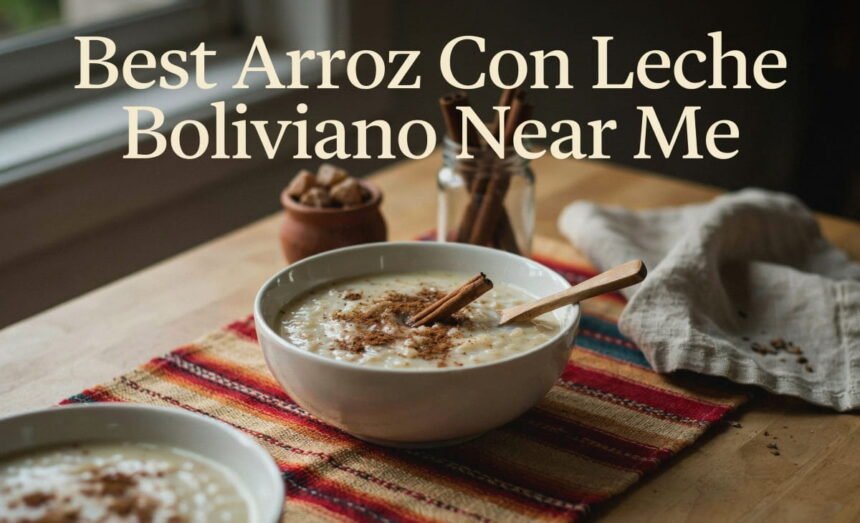
A search for “best arroz con leche boliviano near me” usually starts with something simple but very specific: a craving for warm, cinnamon-scented comfort food that tastes homemade. It is not just about finding any rice pudding. It is about finding the Bolivian style—creamy, lightly spiced, and made with the kind of care that feels closer to family cooking than restaurant dessert menus. The challenge is that this dish often hides in plain sight, listed under general names like “rice pudding” or not listed at all. This guide explains how to track down the best version near you, what to look for, and how to judge quality once you find it.
What Makes Bolivian Arroz con Leche Unique
Bolivian arroz con leche is simple at its core, but its simplicity is exactly what makes it difficult to perfect. It is made with rice, milk, sugar, and cinnamon, sometimes enriched with condensed milk, evaporated milk, cloves, raisins, or citrus peel depending on family tradition. Some versions are light and milky, while others are thick, rich, and almost dessert-pudding dense.
There is no single “correct” recipe across Bolivia. Instead, it changes from household to household and region to region. A version from Cochabamba may feel slightly different from one made in La Paz or Santa Cruz, but the heart of the dish stays the same: soft rice, warm spice, and a creamy base that feels comforting rather than heavy or artificial.
What sets the Bolivian style apart is its homestyle character. It is not designed to be flashy or overly decorated. The focus is always on texture, warmth, and balance rather than presentation.
How to Find the Best Arroz con Leche Boliviano Near You
Finding it requires thinking beyond a simple search bar result. Many people only type “best arroz con leche boliviano near me” and expect instant results, but this dish is often listed indirectly or shared through word of mouth.
A better approach is to combine different search terms. Try “Bolivian restaurant near me,” “Bolivian desserts,” “comida boliviana,” or even “Latin rice pudding near me.” Adding your city name helps narrow down small local spots that don’t always appear in mainstream listings.
It also helps to switch languages. Searching in Spanish often reveals more accurate results because many home cooks and small vendors describe their food in Spanish rather than English. Terms like “arroz con leche boliviano casero” or “postres bolivianos cerca de mí” can uncover hidden listings.
Another useful step is checking social media instead of relying only on maps. Many small Bolivian or Latin food sellers post weekly menus on Instagram or Facebook, especially for weekend desserts or holiday specials.
Where It’s Most Likely to Be Sold
Bolivian restaurants are the first and most obvious place to look. If a restaurant serves dishes like salteñas, silpancho, pique macho, or sopa de maní, there is a strong chance they may also prepare arroz con leche—even if it is not listed daily.
Latin bakeries are another strong option. While not always specifically Bolivian, many bakeries sell variations of rice pudding alongside flan, tres leches, or empanadas. The texture might be more general Latin style, but it can still satisfy the craving if made fresh.
Home cooks and small catering businesses often produce the most authentic versions. These are usually sold through pre-orders, weekend batches, or community-based food networks. This is where you are most likely to find a recipe that tastes closest to traditional homemade Bolivian cooking.
Latin grocery stores can also be surprisingly helpful. Staff often know which local cooks prepare desserts for pickup or delivery, even if they are not officially listed online.
How to Know You’ve Found a Good One
The first sign of quality is aroma. A good arroz con leche should smell like warm milk, cinnamon, and gently cooked rice. It should feel fresh, not sour or overly processed.
Texture is even more important than appearance. The rice should be soft but still intact, not completely broken down into mush. Each spoonful should feel creamy without being gluey or watery.
Sweetness should be balanced. Condensed milk versions will naturally be richer, but they should still allow the cinnamon and milk to come through clearly. If it tastes like pure sugar, the balance is off.
A good version feels comforting after a few bites, not overwhelming. That “second spoon test” is often the easiest way to tell whether it’s worth finishing.
You May Also like this: Best Provoleta Al Horno Near Me: The Complete Guide to Argentina’s Finest Baked Cheese Dish
What to Ask Before You Order
Before ordering, it helps to ask whether it is freshly made that day. Freshness matters a lot because arroz con leche continues to thicken as it sits.
You should also ask whether it is served warm or cold. Warm versions tend to feel softer and more aromatic, while cold versions are thicker and better suited for delivery or takeaway.
It is also worth asking about texture. A simple question like “Is it more creamy or more thick and set?” can help you understand what to expect.
If you have preferences or dietary concerns, ask about ingredients like cinnamon, cloves, raisins, or dairy type. Even small differences in preparation can change the entire flavor experience.
Price, Portions, and Delivery Reality
Arroz con leche is usually a low-cost dessert, but pricing can vary depending on where you order it from. Small local vendors often offer better value than delivery apps, where fees increase the final price.
Portion size can be misleading. A small cup is often enough because the dessert is rich and filling, especially when made with condensed or evaporated milk.
Delivery can also affect quality. Cold versions may become too thick, while warm versions may lose temperature. If it arrives too dense, a small splash of milk can help restore the texture.
For the best experience, pickup is usually better than delivery, especially for dairy-based desserts.
Common Search Mistakes
One of the most common mistakes is assuming all rice pudding is the same. Mexican, Peruvian, Spanish, and Bolivian versions may look similar but taste quite different in spice balance and texture.
Another mistake is relying only on ratings. A restaurant might be excellent for main dishes but average for desserts. Reviews rarely focus on arroz con leche specifically, so it is important to scan for dessert-related comments.
People also often ignore smaller vendors because they are not highly ranked online. In reality, some of the best versions come from home cooks or small bakeries that operate quietly within local communities.
If You Can’t Find It Nearby
If your search does not return results, expand your radius to nearby towns or areas with Latin communities. Many authentic food businesses operate slightly outside major commercial zones.
Community groups on social media can also be extremely helpful. A simple question like “Does anyone know where to find Bolivian arroz con leche near me?” often leads to better answers than search engines.
If all else fails, making it at home is a realistic option. The ingredients are simple—rice, milk, sugar, cinnamon—and the process is more about patience than complexity. Cooking it slowly over low heat is what creates the signature creamy texture.
Final Thoughts
The best arroz con leche Boliviano near you is rarely the most visible option. It is often the quiet one—found in a small Bolivian kitchen, a weekend bakery batch, or a home cook’s limited menu. Finding it takes a mix of smart searching, direct questions, and a little patience.
Once you do find a good version, you will notice it immediately: soft rice, warm cinnamon, creamy milk, and a comforting taste that feels familiar even if it is your first time trying it.
Frequently Asked Questions
What is the best way to find arroz con leche Boliviano near me?
Start with Bolivian restaurants, then check Latin bakeries, home cooks, and social media food groups. Use both English and Spanish search terms for better results.
Is Bolivian arroz con leche served hot or cold?
Both versions exist. Warm is softer and more aromatic, while cold is thicker and more set for storage or delivery.
What ingredients are usually in it?
Most versions include rice, milk, sugar, and cinnamon. Some also include condensed milk, cloves, raisins, or evaporated milk.
How do I know if it is fresh?
Fresh versions smell clean and milky, with soft rice texture and no sour or burnt taste. Asking for preparation time also helps.
Is it the same as regular rice pudding?
It is similar, but Bolivian versions often emphasize cinnamon and a more homestyle balance of sweetness and creaminess.