



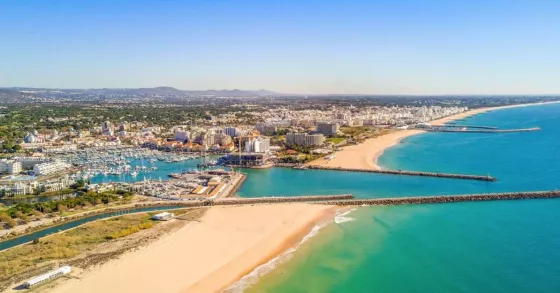
Vilamoura has spent the last decade shifting from a summer marina town into somewhere people genuinely live for most of the year. Walk the quayside on a Tuesday morning in February 2026 and the cafes are open, the supermarkets are busy, and the golf courses have tee times booked out. That year-round rhythm is the single biggest thing visitors miss when they judge the town on an August weekend alone, and it is the thing that most shapes what daily life here is actually like.
The Marina Is a Working Neighbourhood, Not Just a Postcard
The marina holds around 825 berths and remains one of the largest in the Algarve, but the more interesting story for residents is what surrounds it. The promenade restaurants stay open through the shoulder seasons, there is a permanent population of liveaboards and second-home owners, and the daily and weekly markets keep the place ticking well outside peak months. For anyone weighing up central-Algarve living, the marina functions as a genuine town centre rather than a seasonal attraction that shuts in October.
Practical amenities sit within a short walk or a five-minute drive. There is an international school catchment nearby, a marina-side health clinic, and a cluster of gyms and padel courts that have multiplied since 2023. The town works for a retiree, a remote worker and a family in roughly equal measure, which is unusual for a resort settlement. That breadth of resident, rather than a single dominant demographic, is what keeps the local economy diversified and the services open through the quieter months.
Getting around is straightforward. The town is largely flat and walkable, cycle lanes connect the marina to the beaches and the residential quarters behind, and parking is far easier outside July and August than the summer photographs suggest. For a household that wants to reduce its reliance on the car, few resort towns on the coast make it as easy.
Beaches, Golf and the Pine Forest Behind the Town
The Falesia beach cliffs to the east and the softer sands of Praia da Marina give the town two very different coastlines within a few kilometres. Behind the resort, the pine woodland around the golf courses keeps the density low and the summer temperatures a degree or two more bearable than the open coast. Five courses sit within the immediate area, and green fees outside peak weeks remain reasonable by western-European standards.
That woodland setting matters for more than aesthetics. It caps how densely the town can build, which supports property values over time and keeps the resort feeling green rather than concreted. Residents who cycle or walk in the mornings tend to rate the pine belt behind the courses as one of the town’s most underrated everyday assets, particularly in the heat of summer when the shade makes a real difference.
This mix of forest, marina and beach is what keeps the central Algarve buoyant when interior markets soften. Buyers who start by browsing vilamoura property for sale tend to be looking for that specific combination rather than the cheapest square-metre rate, and the town rewards that priority with liquidity when it comes time to sell. Well-located marina and golf-side homes have historically been among the quicker central-Algarve properties to change hands.
Who the Town Suits
Vilamoura is not the right fit for everyone. Buyers chasing an untouched fishing-village feel will be happier further along the coast, and those on the tightest budgets will find more per square metre in neighbouring Quarteira. But for people who want walkable amenities, reliable winter services and a short hop to Faro airport, the town remains one of the most sensible central-Algarve choices in 2026.
- Faro airport is roughly a 25-minute drive, giving quick UK and northern-European connections year-round.
- The marina district keeps most restaurants and services open through winter, unlike smaller resort pockets.
- Five golf courses and a growing padel scene support an active, non-seasonal lifestyle.
- The pine belt and marina zoning keep density low and green space close to home.
Summary
The version of Vilamoura that shows up in holiday photographs is only part of the picture. For anyone considering a longer stay, the town in 2026 offers a working, year-round community with the kind of infrastructure that most Algarve resort settlements simply do not have. Judge it in February as well as August before deciding whether it fits, and the town tends to make a stronger case in the quiet months than the busy ones.