



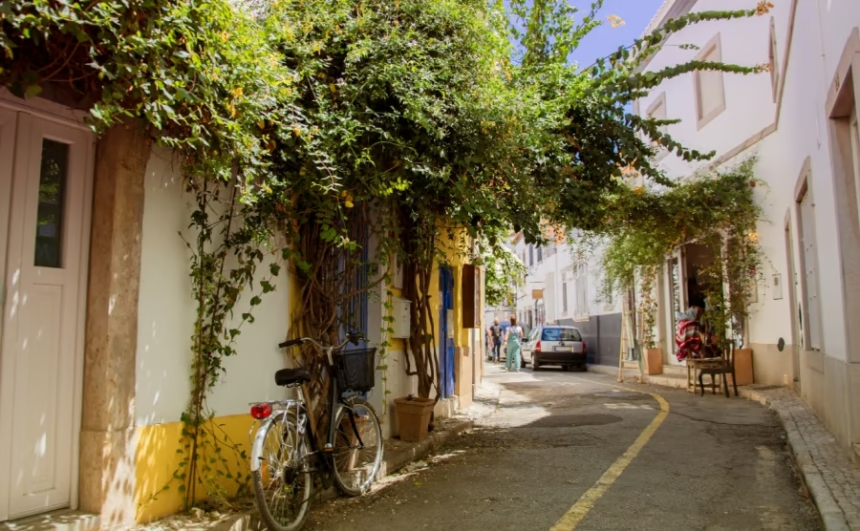
Of all the towns strung along the central-east Algarve, Tavira has developed a reputation that sits slightly apart from the resort-led image many overseas buyers still carry of southern Portugal. It is a working town first and a destination second, and that ordering is precisely what tends to convert a repeat holidaymaker into a property owner. Visitors who arrive expecting a week of quiet often find themselves, three or four trips later, looking seriously at what it would take to keep a base here.
The mechanism is worth understanding, because it explains a great deal about how demand behaves in this part of the Algarve in 2026. Tavira does not sell itself on a single headline attraction. It accumulates on you. The eighteenth-century bridge, the churches folded into the old quarter, the long lunches that stretch into the afternoon, the ferry out to the sandbar island: none of these is a reason to buy a house on its own, but together they build the kind of familiarity that a purchase decision rests on.
Why the slow pace matters to buyers
Slow travel and second-home ownership share a psychology. The traveller who returns to the same town year after year is already behaving like an owner in miniature, learning the seasons, the market days, the difference between the quiet inland streets north of the river and the busier stretch towards the salt pans. By the time such a visitor speaks to an agent, the research phase that a first-time buyer would face is largely complete. They are not asking whether the Algarve suits them. They are asking which street, which orientation, and which price band.
This is why the central-east Algarve draws a different buyer profile from the western resort towns. The typical Tavira purchaser in 2026 is not chasing rental turnover or a marina lifestyle. They are usually a Northern European household, frequently British, Dutch or German, who has spent several years holidaying in the area and now wants a foothold. Budgets commonly sit in the 250,000 to 450,000 euro band for a restored townhouse in or near the old centre, with well-located apartments starting a little below that and standalone villas in the surrounding countryside reaching considerably higher.
The geography that shapes the decision
Tavira sits on the Gilao river a few kilometres inland from the coast, sheltered by the Ria Formosa lagoon and its barrier islands. This geography gives the town a milder, less exposed feel than the open Atlantic front further west, and it keeps the immediate coastline free of high-rise development. Buyers who value that protected, low-density character tend to gravitate here rather than to the busier central Algarve. It also means that the genuinely walkable, characterful housing stock is finite, which supports values over time.
For anyone moving from casual visitor to serious buyer, the practical next step is usually a conversation with an agent who works the town daily rather than one covering the whole region from a distance. A specialist in tavira real estate will know which of the old-quarter houses have been sensibly restored and which hide expensive structural surprises, and that local knowledge is where a lot of the value in the transaction sits.
From familiarity to commitment
The through-line for the slow traveller is that the commitment rarely feels sudden. It arrives as the logical end point of a relationship with a place that has been building quietly for years. Tavira rewards that kind of patience, and in 2026 it remains one of the few Algarve towns where the character that draws people in is also the character they can still buy into.