



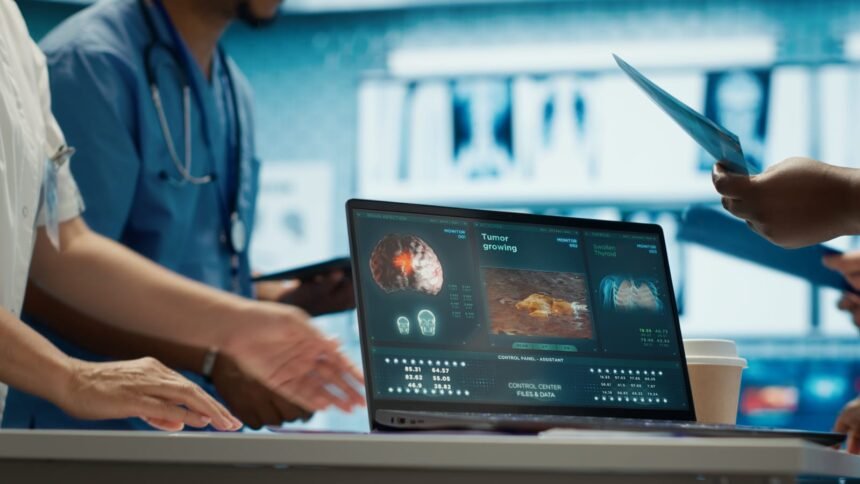
If a patient is living with conditions such as diabetes, high blood pressure, heart disease, or arthritis could feel like a full time job and dealing with day to day symptoms or tracking the appointments of doctors can be overwhelming for both patients and caregivers.
On the other hand, for healthcare staff, they are expected to care for dozens, if not hundreds, of patients over time, and are overburdened with paperwork.
A step toward artificial intelligence (AI).
Although it sounds like something from a science fiction book, AI is very practical and earthy in the context of Chronic Care Management (CCM) software. This is not replacing actual physicians or taking decisions about health care without human intervention. Rather, AI serves as a super-intelligent window cleaner, working in the background. It makes it easier for doctors to identify problems early, lessens the administrative load, and makes life easier for patients with chronic conditions.
Now let us explore the impact of AI-powered software for chronic care management for patients and healthcare providers.
What Is Chronic Care Management Software?
To understand the role of AI, it is important to first grasp the concept of Chronic Care Management (CCM) software.
CCM software is a digital platform that allows the healthcare team to coordinate treatment for patients with chronic medical problems. It helps create individualized treatment programs, combines patient health data, allows private communication with healthcare specialists, and tracks health trends over time.
These systems have traditionally been manual control systems. Both doctors and nurses would need to enter notes, read through lengthy test results one by one, and book appointments for patients’ follow-ups manually. Although it was useful, the old CCM software was very labor-intensive to keep current.
How AI Is Revolutionizing Chronic Care Management
The introduction of AI in the mix amounts to a whole new ball game. AI can process vast amounts of health data in real time and turn the static information in medical records into intelligent tools. Here is how AI is transforming chronic care software now.
1. Early Warning Systems
Another problem with chronic care is that the symptoms can evolve slowly over time and be overlooked by the patient, and what happens is that when people are feeling sick they may come to the emergency department.
Through predictive analytics, AI-driven CCM software assists in resolving this issue.
AI algorithms constantly analyze patient information, including daily blood pressure readings, blood sugar levels, weight, and more, and adapt to the person’s normal range.Every day, patients’ data, including blood pressure readings, blood sugar levels, weight and more, are analyzed by the AI algorithm, which learns what is normal for that patient. The technology promptly alerts the care team if any of this shifts outside of that typical range.
Real-world Example: In two days, a heart failure patient gains three pounds. For a patient, that could be a big deal. However, for a computer program that’s been programmed to recognize fluid retention, it’s a sign that heart function might be failing. The software detects the change . This way the doctor can change the medicine without going to the hospital .
2. Personalized Care Plans Tailored to Every Patient
Each patient has a different experience of the chronic illness. The treatment regimen that is effective for one person with Type 2 diabetes could be different for another.
Doctors can use AI to develop hyper-personalized care plans based on an analysis of:
- Past medical history and lab test results
- Tracking habits on a daily basis, keeping a diet log.
3. Smart Remote Patient Monitoring (RPM)
By employing linked health monitors, such as a blood pressure cuff, smart scale, and pulse oximeter, that transmit health data directly from the patient’s house to their doctor’s office, patients may do the same with Remote Patient Monitoring (RPM).
If doctors didn’t have AI to sort through all those readings, they wouldn’t be able to go through the thousands of numbers that they would have to read each day. AI is the answer to this “data overload” issue because it helps to sort it:
- Completely sorts incoming readings.
- Normal readings are recorded in the background without any noise.
- A red flag is set on abnormal or ‘concerning’ readings and these are highlighted and prioritised for immediate attention of the clinician.
This could reduce the amount of time that doctors spend on busy gibberish, and more time dedicated to those who require assistance.
4. Reducing Administrative Work for Doctors and Nurses
On patient portals, chatbots and virtual assistants powered by AI provide prompt, and this helps reassure the answers to common questions from patients. These assistants’ brains are built on natural language processing, which allows them to understand and respond to human speech in a way that is sensible.
They don’t give medical advice, but they can give the patient health information, remind them to take their medication, and encourage them to call their doctor if they think their symptoms are serious.
The Big Benefits of AI in Chronic Care
Everyone benefits when AI and chronic care software collaborate:
- A higher overall quality of life and fewer hospital stays and complications are the outcomes of early health problem diagnosis.
- Being able to avoid ER visits and readmittance can be cost saving for the individual and the health care organization.
- Creative reminders and user-friendly programs encourage people to take charge of their health.
- Automated repetitive chores reduce stress and burnout among physicians and nurses.
Conclusion
Although the use of AI to the management of chronic care is still developing, the future appears to be quite promising. Care will become even more preventative and preventive as smart wearable technology advances and AI algorithms become more accurate.
Instead of reacting to illnesses after they cause trouble, healthcare is moving toward a future where conditions are managed so smoothly that patients can focus on living their lives, rather than managing their diagnoses.
If you are looking for the best software for chronic care management, get in touch with Tellihealth now.